
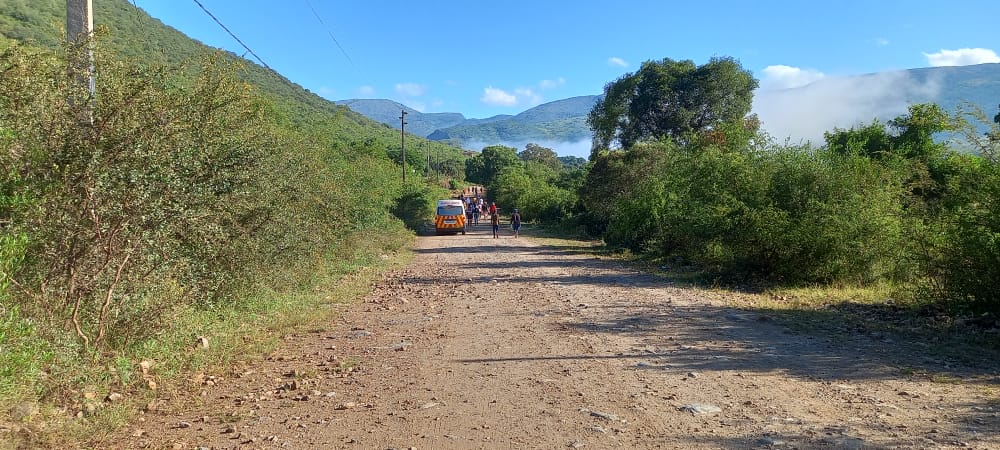
The friendly Phiring community had the privilege of hosting the Fetakgomo Tubatse municipality, Sekhukhune Development Agency (Puleng Mmotla) to a journey of the Tubatse Fetakgomo hiking and camping event that took place at the magical Ba-Dinkwanyane Tourism Association sites. The Ba-Dinkwanyane Tourism Association and Dinkwanyane Water Stewardship Ecosystem Custodians through the Dinkwanyane Water Smart Project, funded by the Government of Flanders, implemented by project partners naming the Kruger to Canyons Biosphere Region, Conservation South Africa, and Hoedspruit Hub supported the planning of this memorable 3-day experience.
Day 1 of the camp and hike had visitors arriving in the morning for a Homestay workshop providing information to community members who are interested in accommodating tourists in their homes. At the workshop, where we had facilitators from the Tubatse 5-star hotel (Thaba Moshate), Mrs Petra Malisa who works in the department of sales at the Hotel and the Honourable Councillor Owen Mashego, the head of portfolio committee of Limpopo Economic Development. Mr Owen shared with the community his understanding of Tourism as a business, and how it is progressing after the big knock the industry took from the Covid-19 pandemic, moreover, how people can benefit from a tourism business. After the workshop, hiking members started to arrive for the camping. An introduction and briefing session was held around a cosy fire and it was a wrap-up for the day.
WHAT ARE HOME STAYS? Home Stays means a person welcoming tourist into their homes and accommodating them to share the lifestyle of the host family.
The community has identified home stays as a potential to become a thriving business in our community to compliment the hikes, especially with the support from Dinkwanyane Water Smart Project (www.kruger2canyons.org) and the Fetakgomo Tubatse Municipality.
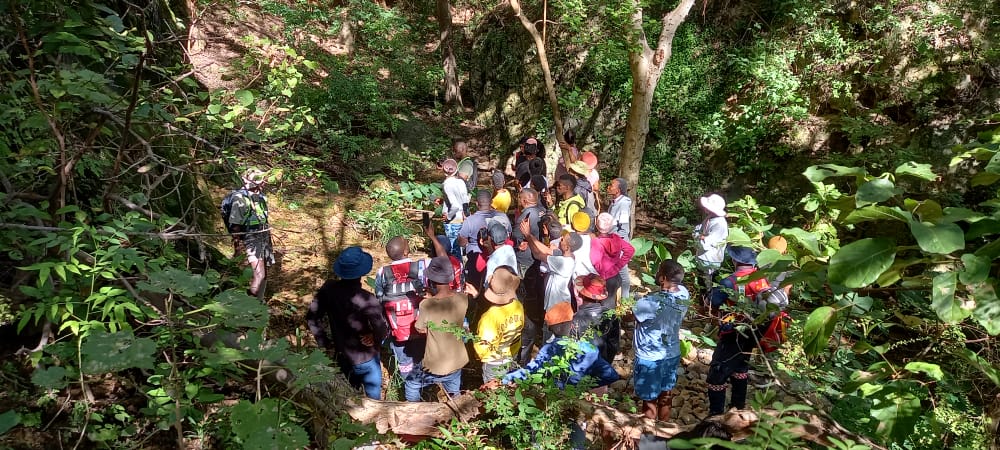
Day 2 was our educational hiking experience which was the highlight of the event. We started very early in the morning at our Traditional Authority where the hikers were camping. A total of 56 Hiking members and seven professional guides, with an ambulance as back-up, hiked!

We arrived at Sekweneng Tufa Rock, learnt about a Tufa rock formation which is a rock that is formed when water absorbs magnesium and calcium from the dolomite rock and then flows over rocks covered in moss in the shady valley. Through photosynthesis, moss produces carbon dioxide. which binds with calcium and magnesium to form calcium carbonate. The calcium carbonate then precipitates on the moss and solidifies under the deposits. On this solidified calcium magnesium carbonate (tufa rock) mosswill grow again, and the process of solidifying will be repeated. The building up of the precipitated layer upon layer is then called TUFA rock. The tufa waterfall differs from an usual waterfall in that rock is built-up instead of being eroded away.
After the lesson, we headed towards the Tufa entrance to have breakfast.Climbing down the 190 stairs we found the the tufa waterfall view point and ancient water reservoir.

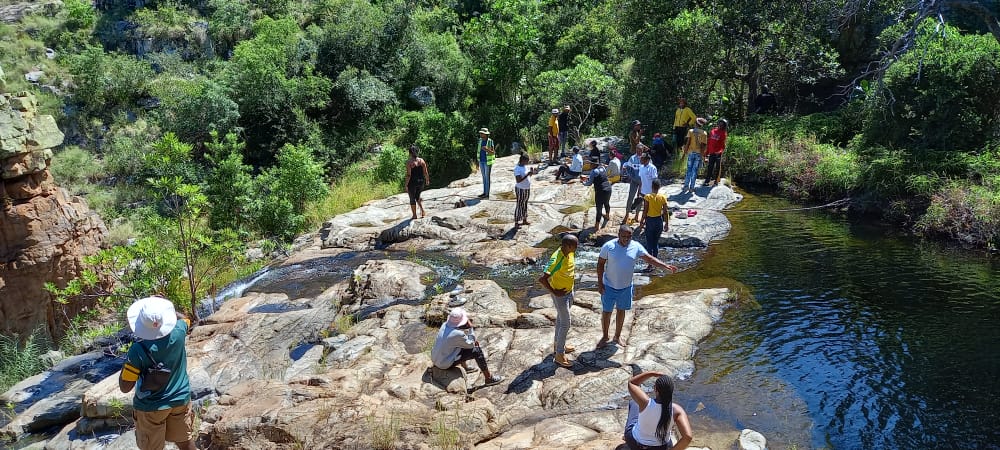
We continued on a connection trail between the two tourism sites to reach the riverine forest on the Sethunyeng hike. Hiking en-route we learned about different kind of biodiversity species such as protected plants in the area, bird life, ferns and so much more. We passed gigantic trees and birds whistled in the canopy of the tree tops. After 1 hour we got to the gun rock, which is an enormous rock with a natural shape of a machine gun hence, the name Sethunyeng – the gun rock. People enjoyed themselves by cooling off in the natural pools from our pristine waterfalls. Thereafter we headed back towards our starting point. On the way we passed by our protected and well managed grazing areas in the wetlands. The guides showed our hikers how we practice agriculture and that it also being our way of conserving our wetlands.
They also explained how our unique Madumbe plant is cultivated in the wetlands – that is in a natural organic method where only animal manure is used to grow the plant and no chemicals nor fertilizer is used. It is a herbaceous, tropical root crop that is grown in South African wetlands and is one of the most important root vegetable food crops in the world. The growth season is 9 months towards harvesting. Madumbe has a rich earthy flavour, is high in carbohydrates (low GI) and has much more protein and amino acids than any other root crop.
Hikers were also educated on grazing camps and how rangeland management assisted in terms of the health of local livestock. Rangeland management is a practice used in order to have better and improved animal health conditions.
We proceeded from rangeland, hiking straight to our camps and then enjoyed a gourmet lunch. Those who were not camping headed home and those camping settled around the fire and mingled while taking turns in bathing. Thereafter it was dinner and we called it a night after an exciting and educational day with knowledgeable local site guides
Early in the morning of day 3, we had an exercise session in preparation for our 3.8km fun walk. Coming back from the fun walk we all had a reflection meeting where all the wrongs and rights and rooms of area to improve were jotted down.
Last on our weekend agenda was the Tubatse Fetakgomo hiking camping radio podcast with officials from Tubatse Municipality and our professional guides from Dinkwanyane Water Smart project having interviews. The weekend was then wrapped-up.

A big shout and applause out to all parties involved, sponsors, DWS team members, Fetakgomo Tubatse Municipality, Thaba Moshate casino and convention, hikers and Phiring community members for our successful hiking event.
For more information or to book a visit to this magical area, please look at our website – www.dinkwanyanetourism.co.za or call us on 060 701 9526.